Semrush vs Surfer SEO South Africa
SEO Tools for South African SMEs in 2026: Semrush vs Surfer SEO
A practical Semrush vs Surfer SEO comparison for South African SMEs, agencies and ecommerce brands. Compare research, content, audits, AI visibility and cost.
By Yash Batra · · 9 min read
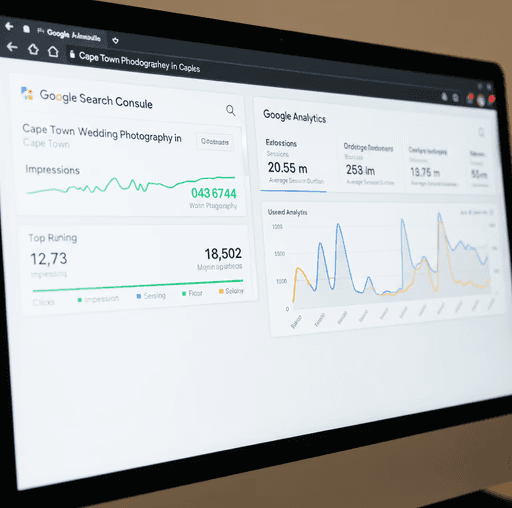
South Africa is an interesting organic-search market for SMEs, ecommerce brands and agencies. Google still accounts for more than 90% of search-engine usage in the country, so search visibility remains commercially relevant even as AI-driven discovery grows.
The harder question is software economics. SEO platforms are generally billed in US dollars, while local businesses earn and budget in rand. A subscription has to earn its place in the workflow.
Semrush and Surfer SEO overlap in a few areas, but they are built around different jobs. Semrush helps investigate and manage the market. Surfer helps improve the content being produced.
The simplest way to understand the difference
Semrush is the broader research, audit and monitoring platform. Surfer is the more specialised content-optimisation environment.
That means the right choice depends less on feature count and more on what your business is actually trying to fix.
Where Semrush fits
Imagine a South African ecommerce business selling nationally. The team needs to understand category demand, competing pages, technical health, ranking movement and authority gaps before deciding where to invest.
- Keyword and competitor research
- Site Audit and crawlability checks
- Backlink research
- Position Tracking
- Keyword-gap analysis
- AI-search visibility and monitoring
For businesses still deciding where the organic opportunity is, Semrush provides more context before content production begins.
Where Surfer SEO fits
Now imagine the strategy is already decided. You know the target topic, but writers need a repeatable way to build and improve pages without reinventing the brief every time.
That is much closer to Surfer’s core job. Its content workflow analyses the search landscape around a target query and helps guide topic coverage, optimisation and page refreshes.
The cost question in South Africa
As of late September 2026, Semrush lists its SEO plan at about $139 per month on monthly billing. Surfer lists Discovery at $49 per month. Always verify live pricing because packages and limits change.
The useful calculation is monthly software cost divided by useful SEO decisions or outputs created.
If a tool helps an agency retain clients or helps an ecommerce store identify a profitable category opportunity, the subscription may justify itself. If it produces reports nobody acts on, it does not.
Which is better for a South African small business?
If you do not yet have an SEO strategy, the broader research problem comes first. You need to understand search demand, competitors, existing rankings and technical issues before publishing dozens of articles.
If you already know the target topics but struggle to produce strong pages consistently, Surfer can be the more focused purchase.
Which is better for South African ecommerce?
Ecommerce usually pushes the decision toward the broader stack because category intent, duplicate or thin pages, internal linking, crawlability, competitors, rankings and backlinks all matter.
Surfer becomes useful once content production itself becomes a serious growth channel, especially for buying guides, category content, comparison pages and evergreen education.
Which is better for an SEO or marketing agency?
Agencies rarely perform only one SEO task. One client may need a technical audit, another competitor research, another keyword tracking and another a content plan.
That breadth favours Semrush for account-level research and monitoring. Surfer can still be valuable for the team responsible for writing and editing content.
A sensible workflow is Semrush → validate the opportunity; Surfer → execute and improve the content; Google Search Console + GA4 → measure what actually happened.
Do these tools matter more now that people use AI search?
They matter differently. Google remains dominant in South Africa, but discovery is becoming more fragmented as users also get answers through AI systems.
Both Semrush and Surfer have expanded into AI-search visibility. Use that data as context, then connect it to qualified visibility, traffic, leads, ecommerce revenue and branded demand.
A simple buying framework
- Do we know which keywords and competitors matter?
- Is the website technically healthy?
- Are we producing enough content to justify a dedicated optimisation workflow?
- Who will use the tool every week?
- What business metric should improve because of this subscription?
Do not buy both tools simply because they appear together in software roundups. Buy the capability that fixes the current bottleneck.